

Credit Score Drops After Paying Off Loans: Why This Happens
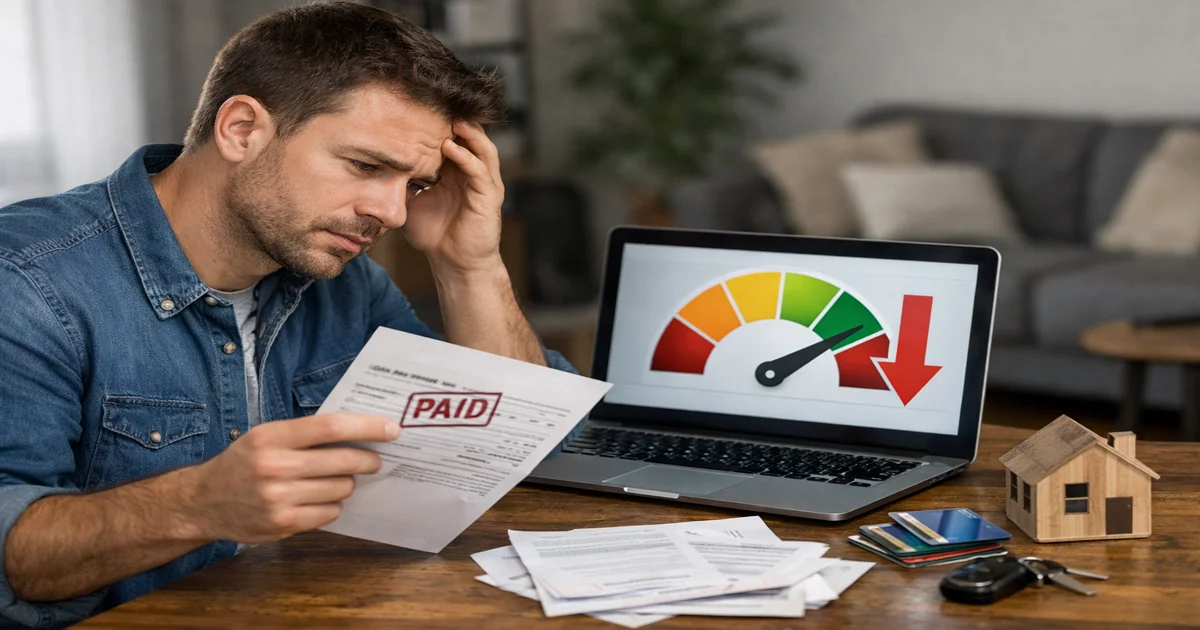
I paid off my car loan last month, expecting to see my credit score jump. Instead, it dropped 23 points. If you’re reading this because the same thing happened to you, you’re not alone — and you’re not crazy.
This counterintuitive drop after doing something “financially responsible” frustrated me enough to dig deep into how credit scoring actually works. What I found surprised me. Paying off loans can temporarily hurt your credit score for several specific reasons that most people don’t understand.
Here’s what’s really happening to your score and what you can do about it.
Why Does Your Credit Score Drop When You Pay Off a Loan?
The credit scoring system isn’t designed to reward you immediately for paying off debt. It’s designed to predict your future borrowing behavior based on patterns.
When you close a loan account, several things happen simultaneously that can negatively impact your score. Your credit mix changes, your total available credit might decrease, and your payment history pattern shifts.
Think of it like this: you just eliminated proof that you can handle that type of debt responsibly. The algorithm sees this as removing positive data, not adding it.
How Credit Mix Affects Your Score After Payoff
Credit mix accounts for 10% of your FICO score. Having different types of credit — revolving credit like credit cards and installment loans like car loans or mortgages — shows lenders you can manage various forms of debt.
When you pay off your only installment loan, you lose that diversity. If you only have credit cards left, your credit profile becomes less robust in the eyes of scoring models.
I experienced this firsthand. After paying off my car loan, my credit mix went from “excellent” to “good” on Credit Karma’s assessment. That single change contributed to my score drop.
The Credit Utilization Ratio Misconception
Here’s where it gets tricky. Many people think paying off loans improves their credit utilization ratio, but that’s only partially true.
Credit utilization primarily refers to revolving credit (credit cards), not installment loans. However, your overall debt-to-credit ratio does include all types of credit. When you eliminate an installment loan, you’re removing both the debt and the credit line.
If that loan represented a significant portion of your total available credit, your utilization on remaining accounts becomes a larger percentage of your total credit picture.
Length of Credit History Impact When Closing Accounts
Payment history makes up 35% of your credit score — the largest factor. When you pay off and close a loan, you stop adding positive payment history to that account.
More importantly, if that loan was one of your older accounts, closing it can eventually affect your average account age. While closed accounts in good standing typically stay on your credit report for 10 years, they will eventually fall off.
The immediate impact isn’t usually from account age, but from the loss of ongoing positive payment history on that account.
Does the Type of Loan Matter for Your Credit Score?
Absolutely. Different loan types affect your credit score differently when paid off.
Auto loans typically have the most noticeable impact because they’re often substantial installment loans that contribute significantly to your credit mix. When I paid off my $18,000 car loan, the credit mix change was dramatic.
Personal loans can have a similar effect, especially if they represent your only installment credit. However, since personal loans often have higher interest rates, the financial benefit usually outweighs the temporary credit score dip.
Student loans are interesting because they’re often your longest-standing credit accounts. Paying these off can have a more significant impact on your credit age and mix, especially if you don’t have other installment loans.
How Long Does the Credit Score Drop Last?
In my experience, the initial drop lasted about two months before my score started recovering. Most people see their scores stabilize within 3-6 months after paying off a loan.
The recovery depends on your other credit accounts and how you manage them. If you have credit cards with low utilization and continue making on-time payments, your score will typically rebound.
The temporary nature of this drop is crucial to understand — it’s not permanent damage to your credit profile.
Should You Keep Loans Open to Maintain Your Credit Score?
This is where personal finance gets personal. From a pure credit score standpoint, keeping a loan open longer can help maintain your credit mix and payment history.
But paying interest just to maintain a credit score is rarely worth it financially. I calculated that keeping my car loan for an extra year would have cost me $1,200 in interest to potentially maintain a slightly higher credit score.
The exception might be if you’re planning to apply for a major loan (like a mortgage) in the next few months. In that case, timing your loan payoff after your mortgage approval could make sense.
What to Do When Your Credit Score Drops After Payoff
First, don’t panic. This is normal and temporary for many people.
Monitor your credit report for accuracy. Sometimes the drop isn’t from the payoff itself but from errors that coincidentally appeared around the same time. I’ve seen closed accounts incorrectly reported as “settled” instead of “paid in full.”
Focus on optimizing your remaining accounts. Keep credit card utilization low (under 10% if possible), and make sure all payments are on time. These factors will help your score recover faster.
Consider your overall financial picture. Yes, your credit score dropped, but you eliminated a monthly payment and interest charges. Calculate the long-term financial benefit versus the temporary score impact.
How to Minimize Credit Score Impact When Paying Off Loans
If you’re planning to pay off a loan and want to minimize the credit score impact, timing and strategy matter.
Before paying off the loan, make sure your credit cards have low balization. If your utilization is high, pay down credit cards first, then tackle the loan.
Consider your credit mix. If you’re paying off your only installment loan, you might want to keep one small installment account open, though this isn’t usually worth paying interest for.
Don’t close credit cards around the same time you pay off loans. Multiple account closures can compound the negative impact on your score.
When Paying Off Loans Actually Improves Your Credit Score
Not everyone experiences a credit score drop after paying off loans. Your score might actually improve if you have several other installment loans remaining, maintaining your credit mix.
High debt-to-income ratios can indirectly affect your creditworthiness. If paying off the loan significantly improves your debt-to-income ratio, the overall positive impact on your financial profile might outweigh the temporary score dip.
People with multiple types of credit accounts typically see less negative impact from paying off a single loan.
The Long-Term Benefits Outweigh the Short-Term Score Drop
Let’s put this in perspective. When I paid off my car loan, yes, my credit score dropped 23 points initially. But I also freed up $340 per month and saved $1,800 in interest I would have paid over the remaining loan term.
Six months later, my credit score was actually higher than before I paid off the loan, thanks to improved credit utilization and continued on-time payments on my remaining accounts.
The temporary score drop is a small price to pay for the financial freedom and interest savings that come with eliminating debt.
Alternative Strategies for Managing Credit After Loan Payoff
If maintaining your credit score is crucial for upcoming financial decisions, consider these strategies:
Keep the loan account open for a few extra months if there’s no prepayment penalty and the interest cost is minimal. This gives you time to optimize other aspects of your credit profile.
Apply for a new credit card to increase your total available credit, which can help with utilization ratios. Just be strategic about timing and don’t apply for multiple accounts at once.
Consider becoming an authorized user on a family member’s account with excellent payment history and low utilization.
Conclusion
Your credit score dropping after paying off a loan is frustrating, but it’s often a normal part of how credit scoring works. The algorithm values diversity and ongoing positive payment history, so eliminating an installment loan can temporarily hurt your score.
But here’s my honest take: don’t let credit score optimization prevent you from eliminating high-interest debt. The financial benefits of being debt-free almost always outweigh the temporary credit score impact.
Focus on the bigger picture. Pay off your debts, optimize your remaining credit accounts, and your score will recover. The peace of mind and improved cash flow from eliminating debt payments is worth far more than a few credit score points.
Frequently Asked Questions
How much will my credit score drop after paying off a loan?
Most people see drops of 10-30 points, though it varies based on your overall credit profile and the loan type.Will paying off my car loan hurt my credit score permanently?
No, the impact is typically temporary. Most scores recover within 3-6 months with good credit management.Should I keep a small balance on loans to maintain my credit score?
Generally no. The interest costs usually outweigh any credit score benefits from keeping loans open longer.Does paying off student loans affect credit scores differently?
Yes, student loans often represent long credit history, so paying them off can have a more noticeable impact on credit age.How can I rebuild my credit score after paying off all my loans?
Focus on credit card management, keep utilization low, make on-time payments, and consider your credit mix for future borrowing needs.
