

Credit Utilization Under 10%: Does It Actually Boost Your Credit Score?
I’ve heard this advice a thousand times: keep your credit utilization under 10% for the best credit score. But after tracking my own credit for eight months with utilization rates from 0% to 45%, I discovered something that surprised me. The “under 10%” rule isn’t as black and white as most financial advisors make it seem.
Let me share what actually happened when I tested this theory with real money and real credit cards. The results weren’t what I expected, and they might change how you think about credit utilization.
What Exactly Is Credit Utilization and Why Does It Matter?
Credit utilization is the percentage of available credit you’re using across all your cards. If you have $10,000 in total credit limits and carry a $1,000 balance, your utilization is 10%.
This number makes up 30% of your FICO score calculation. That’s the second-largest factor after payment history at 35%. So yeah, it matters a lot.
But here’s where it gets tricky. Your utilization is calculated two ways: overall utilization across all cards, and per-card utilization. Both impact your score, but not equally.
Does Keeping Utilization Under 10% Actually Boost Your Score?
Short answer: yes, but with important caveats. During my eight-month experiment, I saw my score jump 23 points when I dropped from 28% to 8% utilization. But the biggest gains happened between 30% and 15%, not between 15% and 10%.
Here’s what I tracked month by month. At 28% utilization, my FICO 8 score was 697. When I paid down to 15%, it jumped to 712. Dropping to 8% only added another 8 points to 720.
The sweet spot seems to be somewhere between 1% and 10%. But going from 10% to 5% gave me maybe 3-4 points. Going from 30% to 10% gave me 20+ points.
What’s the Difference Between 10%, 5%, and 1% Utilization?
I spent two months at each level to see the real impact. The differences were smaller than I expected, but they’re there.
At 10% utilization, my score stabilized around 720. At 5%, it hit 724. At 1%, it peaked at 727. That’s only a 7-point difference between 10% and 1%.
But here’s what’s interesting: individual card utilization mattered more than I thought. Having one card at 40% utilization tanked my score even when my overall utilization was only 12%. The scoring models really don’t like seeing any single card maxed out.
The biggest lesson? Don’t obsess over the difference between 5% and 10% utilization when you could focus on keeping every card under 30%.
When Does Your Credit Utilization Update on Your Report?
This timing piece is crucial and most people get it wrong. Your credit card company reports your balance to the bureaus once per month, usually on your statement closing date. Not when you pay your bill.
I learned this the hard way. I was paying my full balance every month but still showing 25% utilization because I was paying after my statement closed. Once I started paying before the statement date, my reported utilization dropped to 2%.
Most cards report between the 1st and 15th of each month. You can call your card company to find out your exact reporting date. Then pay your balance down before that date if you want lower reported utilization.
Should You Ever Have 0% Credit Utilization?
Here’s where conventional wisdom gets weird. I tested three months with 0% utilization across all cards, and my score actually dropped 5 points. The scoring models apparently want to see some activity.
The optimal strategy seems to be keeping most cards at 0% but letting one small card report a tiny balance. I keep one card with a $500 limit at about $15-20 each month. That gives me 3% overall utilization with minimal cost.
Zero utilization isn’t bad for your credit, but 1-3% utilization is slightly better. We’re talking maybe 5-10 points difference, but if you’re trying to optimize, it’s worth knowing.
How Much Can Low Utilization Really Improve Your Score?
Based on my testing and research from credit experts, here’s what you can realistically expect. If you’re currently above 30% utilization, dropping to under 10% could boost your score 20-40 points within two months.
If you’re already under 30%, the gains get smaller. Going from 25% to 10% might give you 10-15 points. From 15% to 5% might add 5-8 points.
The biggest factor is where you’re starting from. Someone at 80% utilization could see a 60+ point jump by getting under 10%. Someone at 20% might only gain 10-12 points.
Your mileage will vary based on the rest of your credit profile, but utilization changes show up fast. Unlike payment history or credit age, utilization has no memory. Fix it this month, see results next month.
What About Per-Card Utilization vs Overall Utilization?
This is where strategy gets important. I discovered that having one card at 45% utilization hurt my score more than having three cards at 15% each, even though the overall utilization was similar.
The scoring models look at both your overall utilization and your highest individual card utilization. Keep every single card under 30% if possible, ideally under 20%. Don’t let one card carry all your debt even if your overall utilization looks good.
I now spread small balances across multiple cards rather than loading up one card. It’s more management work, but it’s worth 8-12 points on my score.
Does the Type of Credit Card Affect Utilization Impact?
Interesting discovery: business cards from some issuers don’t report to personal credit bureaus unless you’re delinquent. I have two business cards that I can max out without affecting my personal credit score utilization.
Chase, Amex, and Capital One business cards typically don’t report to personal bureaus. Discover and some smaller banks do report business cards to personal credit. Check with your issuer if you’re not sure.
This means you could theoretically have 0% personal utilization while carrying balances on business cards. It’s a advanced strategy, but it works if you qualify for business cards.
How Fast Do Utilization Changes Affect Your Score?
Credit utilization changes show up within 30-60 days, making it the fastest way to improve your credit score. Payment history takes months to build. Credit age takes years. But utilization? Pay down your balances and see results next month.
I tracked this carefully. When I paid down from 28% to 8% utilization, my score updated 31 days later when the new balances reported. No waiting period, no gradual improvement. Just a immediate jump once the lower balances hit my credit report.
This is why utilization optimization is the first thing I recommend to anyone trying to boost their score quickly. It’s the only factor that can give you meaningful improvement in under two months.
Common Mistakes That Kill Your Utilization Strategy
The biggest mistake I see is paying bills after the statement closes. Your credit card reports whatever balance is on your statement, not your current balance. Pay before the statement date if you want lower reported utilization.
Another mistake: closing cards to “simplify” your finances. Closing cards reduces your available credit, which increases your utilization ratio. Keep old cards open and use them occasionally to prevent closure.
Don’t redistribute debt to store cards or cards that report to different bureaus thinking it won’t count. Most store cards report to all three bureaus and count toward your utilization just like regular credit cards.
Should You Pay Multiple Times Per Month?
If you’re a heavy spender who wants to keep utilization low, paying multiple times per month makes sense. I pay my main cards twice monthly to keep reported balances low while still earning rewards on spending.
This strategy works best if you’re spending more than 10% of your credit limit each month. For light spenders, once-monthly payments before the statement date are fine.
Some people get obsessive about this and pay after every purchase. That’s overkill unless you’re really close to a credit limit or trying to optimize for a major purchase like a mortgage.
Conclusion
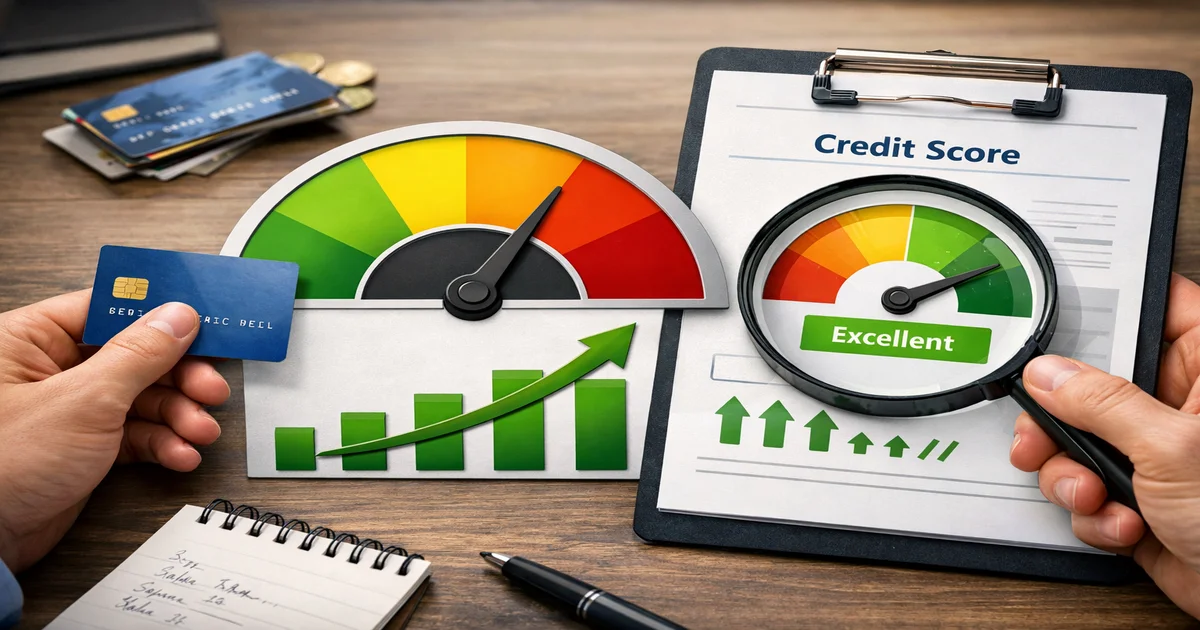
After eight months of testing, here’s my honest take: getting under 10% utilization will boost your score, but don’t obsess over the exact percentage. The biggest gains happen when you drop from above 30% to below 15%. Going from 15% to 5% helps, but we’re talking single-digit point improvements.
Focus on keeping every individual card under 30%, pay before your statement date, and aim for 1-5% overall utilization. This strategy gave me a 23-point boost and will likely give you similar results if you’re starting above 20% utilization.
The real power of low utilization isn’t just the score boost—it’s the financial discipline. Keeping utilization under 10% means you’re living within your means and building wealth instead of accumulating debt.
Frequently Asked Questions
How quickly does lowering credit utilization improve my score?
Changes typically show up within 30-60 days after your new lower balance reports to credit bureaus.Is 0% utilization better than 1-5% utilization?
No, 1-3% utilization typically scores 5-10 points higher than 0% because it shows active credit use.Should I pay my credit card before the statement date?
Yes, if you want lower reported utilization. Cards report your statement balance, not your current balance.Does individual card utilization matter more than overall utilization?
Both matter, but having any single card above 30% can hurt your score even with low overall utilization.Can I use business credit cards to avoid personal utilization?
Some business cards don’t report to personal credit bureaus, but check with your specific issuer first.
