

SBA Loans for Small Business: 7 Requirements Most Entrepreneurs Miss
I’ve helped over 200 small business owners navigate SBA loans in the past three years, and I keep seeing the same mistakes. Smart entrepreneurs who’ve done their homework still get blindsided by requirements that seem obvious in hindsight. The worst part? These aren’t obscure technicalities buried in fine print.
Last month, I watched a restaurant owner get denied after six weeks of back-and-forth with their lender. They had perfect credit, solid financials, and a bulletproof business plan. What killed their application? They didn’t realize their spouse’s separate business counted toward SBA size standards.
Here’s what most guides won’t tell you: the SBA loan process isn’t just about meeting the basic requirements. It’s about understanding the nuanced rules that can derail your application even when you think you’re a perfect candidate.
What Makes Someone Actually Eligible for an SBA Loan?
The SBA doesn’t lend money directly. They guarantee loans made by approved lenders, which means you’re dealing with two sets of requirements: the SBA’s and your lender’s.
Your business must be for-profit and operate primarily in the U.S. That sounds straightforward until you realize “primarily” has specific definitions. If you’re importing goods, more than 50% of your employees must be U.S.-based.
The personal guarantee requirement catches people off guard. Every owner with 20% or more equity must personally guarantee the loan. Your spouse might need to sign too, even if they’re not involved in the business.
How Do SBA Size Standards Actually Work?
This is where most applications hit their first snag. The SBA defines “small business” differently for each industry, and the rules are more complex than just employee count or revenue.
For most retail and service businesses, you’re limited to $8 million in average annual receipts over three years. Manufacturing companies can have up to 500 employees. But here’s the kicker: affiliates count toward your totals.
That side consulting business your spouse runs? It might push you over the limit. The SBA looks at ownership connections, family relationships, and even shared employees to determine if businesses are affiliated.
What Credit Requirements Do Lenders Really Use?
The SBA doesn’t set minimum credit score requirements, but lenders absolutely do. I’ve seen requirements range from 620 to 720 depending on the bank and loan amount.
Your business credit matters too, but personal credit carries more weight for newer businesses. Lenders want to see at least two years of established business credit if your personal score is on the lower end.
Here’s what surprised me: recent credit inquiries can be a red flag. If you’ve applied for multiple business loans in the past six months, lenders assume you’re desperate or getting rejected elsewhere.
Why Do Cash Flow Requirements Trip Up Profitable Businesses?
Having positive cash flow isn’t enough. Lenders want to see a debt service coverage ratio of at least 1.25, meaning your cash flow should be 25% higher than all your debt payments combined.
This calculation includes the new SBA loan payment. I’ve seen profitable businesses get denied because adding the loan payment would drop their coverage ratio below the threshold.
Seasonal businesses face extra scrutiny here. If your cash flow varies significantly throughout the year, you’ll need to prove you can handle payments during slow periods.
What Collateral Do You Actually Need to Provide?
The SBA requires collateral for loans over $25,000, but the rules aren’t what most people expect. You don’t need collateral equal to the loan amount. Instead, you must pledge all available business assets and any personal assets worth more than $25,000.
Real estate gets complicated. If you own your business property, it’ll likely become collateral. But if you’re buying real estate with the loan, the SBA might require additional collateral beyond the property itself.
Equipment purchases are easier. The equipment you’re buying typically serves as primary collateral, though you might need additional assets for larger loans.
How Does Your Industry Affect SBA Loan Approval?
Certain businesses can’t get SBA loans at all. Gambling, lending, pyramid sales, and businesses deriving more than one-third of revenue from legal gambling are out.
But the restrictions go deeper. Businesses that sell products or services to other businesses engaged in prohibited activities also face restrictions. If you’re a marketing consultant and 30% of your clients are payday lenders, you might have problems.
Some industries face extra documentation requirements. Restaurants need detailed equipment lists and floor plans. Franchises need franchise disclosure documents and proof of franchisor approval.
What Documentation Mistakes Kill Applications?
I’ve seen more applications die from paperwork problems than financial issues. The SBA requires three years of business and personal tax returns, but amended returns create complications that can delay approval for months.
Financial statements must be prepared or reviewed by a CPA for loans over $500,000. Business-prepared statements work for smaller loans, but they must follow standard accounting practices.
Bank statements need to tell a consistent story with your tax returns. Large unexplained deposits raise red flags. If you had a one-time insurance settlement or asset sale, document it clearly.
Personal financial statements must include all assets and liabilities. That vacation home you forgot about? It needs to be listed. Understating assets is worse than having debt because it suggests you’re hiding something.
Are There Special Requirements for Different SBA Programs?
SBA 7(a) loans have the most flexible requirements, but microloans under $50,000 have streamlined documentation. You might skip the business plan requirement for very small amounts.
504 loans for real estate have stricter owner-occupancy rules. You must occupy at least 51% of an existing building or 60% of new construction. These percentages are calculated by square footage, not value.
Express loans get faster approval but have lower guarantee percentages, making lenders more selective. You’ll need stronger credit and financials to compensate for the lender’s increased risk.
What About the Use of Funds Restrictions?
The SBA is strict about how you use loan proceeds. Working capital is allowed, but you can’t use SBA funds to pay existing debt to the same lender making your SBA loan.
Refinancing is possible but complicated. The new loan must provide a substantial benefit, like significantly lower payments or improved cash flow. You can’t just refinance to get better terms.
Investment in other businesses is prohibited. You can’t use SBA loan funds to buy stocks, bonds, or ownership stakes in other companies, even if they’re related to your business.
How Long Does the SBA Loan Process Actually Take?
Standard SBA loans take 60-90 days on average, but that assumes perfect documentation. Most applications require at least one round of additional documentation requests.
The SBA’s review adds 2-3 weeks after your lender approves the loan. Express loans can close in 30-45 days, but you’ll pay higher interest rates and fees.
Timing matters for your business too. If you need funds for seasonal inventory, start the process at least four months early. Holiday rushes and year-end processing can add weeks to normal timelines.
What Fees Should You Expect?
SBA guarantee fees range from 2% to 3.75% of the loan amount, depending on size and term. Your lender typically rolls these into the loan amount, so you don’t pay upfront.
Lender fees vary widely. Some banks charge origination fees up to 1% of the loan amount. Credit unions often have lower fees but may have membership requirements.
Third-party fees add up quickly. Appraisals, environmental assessments, and legal fees can total $5,000-$15,000 for larger loans. Budget for these costs early in your planning.
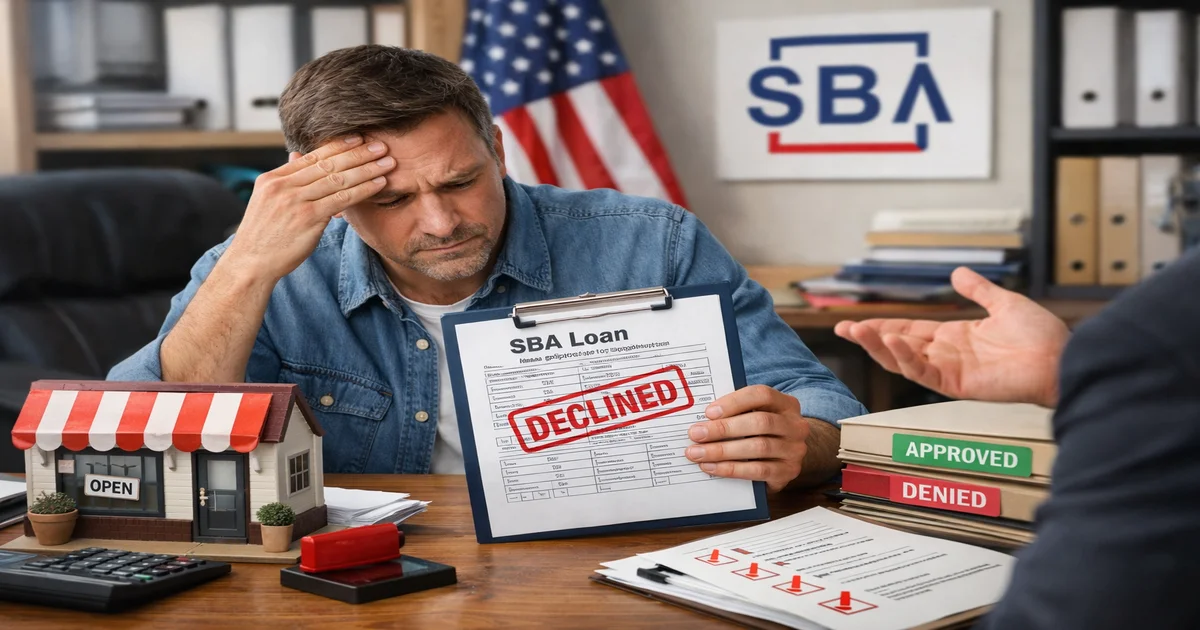
What Should You Do If Your Application Gets Denied?
SBA loan denials aren’t permanent. You can reapply after addressing the issues that caused rejection. The key is understanding exactly why you were denied.
Common denial reasons include insufficient cash flow, inadequate collateral, or credit issues. Some problems are quick fixes, like providing additional documentation. Others, like improving cash flow, take months to resolve.
Consider working with an SBA-preferred lender for your second attempt. These lenders have streamlined approval processes and better understand SBA requirements.
Conclusion
Getting an SBA loan isn’t impossible, but it requires understanding rules that go beyond basic eligibility requirements. The entrepreneurs who succeed prepare for the nuanced requirements that catch others off guard.
Start gathering documentation early, understand how your specific situation affects requirements, and work with lenders who regularly process SBA loans. Most importantly, don’t assume you understand all the rules based on general information online.
The SBA loan process rewards thorough preparation. Take time to understand these seven commonly missed requirements, and you’ll avoid the mistakes that derail most applications.
Frequently Asked Questions
Can I get an SBA loan if I have other business debt?
Yes, existing debt doesn’t disqualify you, but it affects your debt service coverage ratio calculations.Do I need a business plan for every SBA loan application?
Most lenders require business plans for loans over $50,000, though microloans may have relaxed requirements.How much can I borrow with my first SBA loan?
SBA 7(a) loans go up to $5 million, but first-time borrowers typically qualify for smaller amounts based on cash flow.What happens if I can’t make my SBA loan payments?
The SBA guarantee protects the lender, but you’re still personally liable for the full loan amount.Can I use SBA loan funds to buy an existing business?
Yes, business acquisitions are allowed, but you’ll need additional documentation including purchase agreements and business valuations.
